the cowboy life captured through a lens
Gene Peach, 53, spent the past eight years collaborating on a project that tugs on his heart: the world of the cowboy.
Peach, who has strong Southern roots but grew up on an Indiana farm, understands the ranch-hand mentality and is passionate about bringing these stories to life.
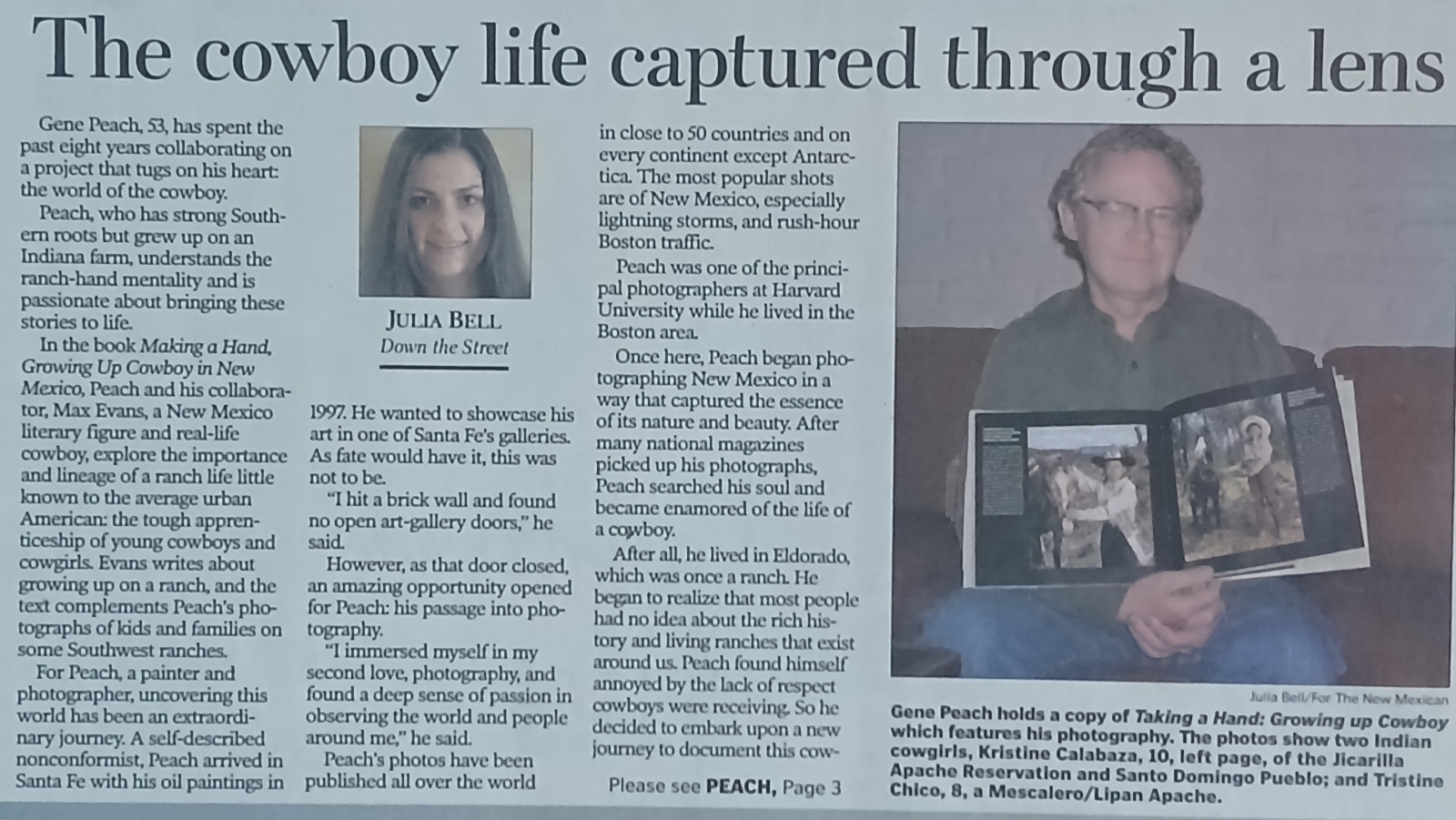
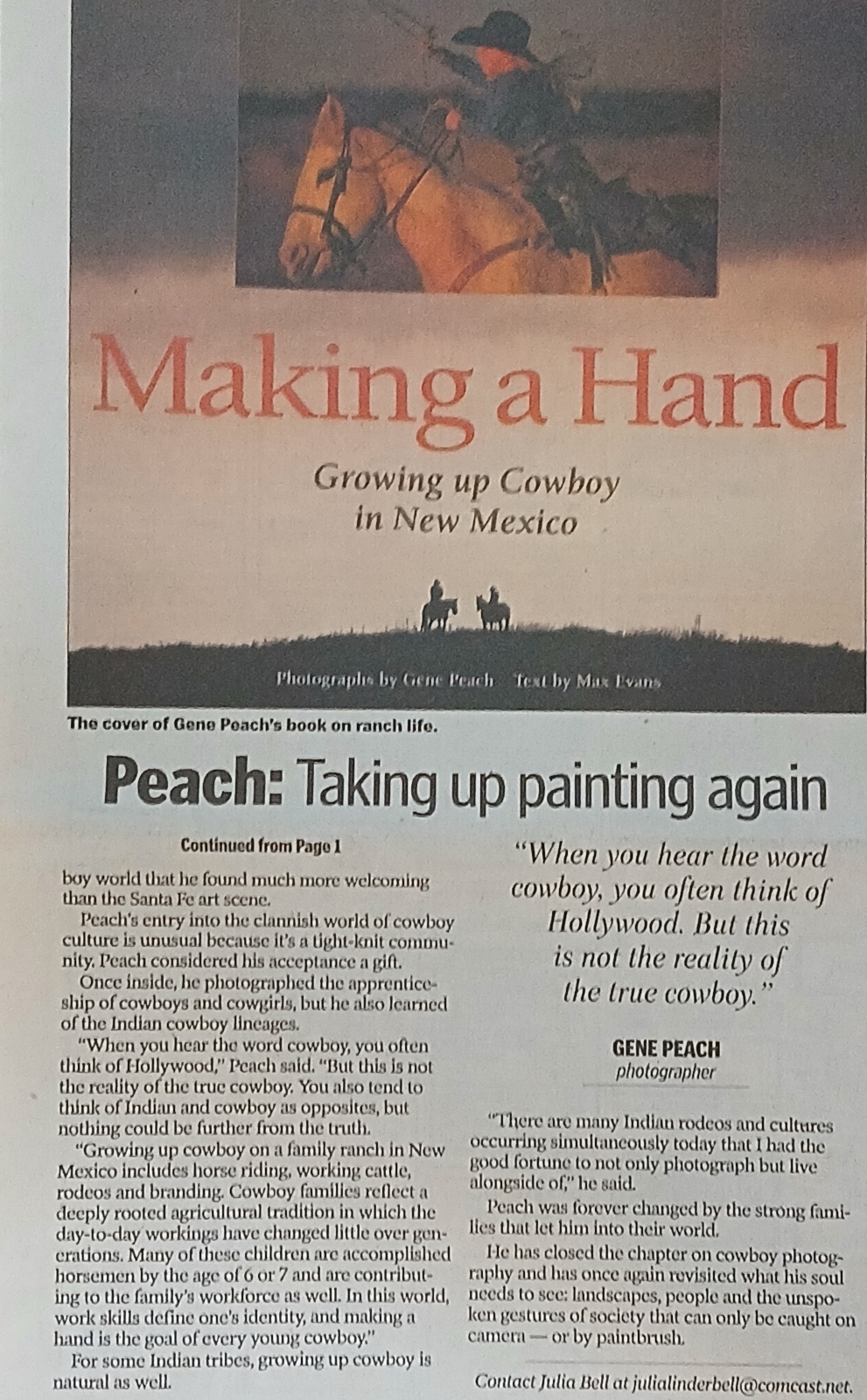
In the book Making a Hand, Growing Up Cowboy in New Mexico, Peach and his collabora- tor, Max Evans, a New Mexico literary figure and real-life cowboy, explore the importance and lineage of a ranch life little known to the average urban American: the tough appren- ticeship of young cowboys and cowgirls. Evans writes about growing up on a ranch. and the text complements Peach's pho- tographs of kids and families on some Southwest ranches.
For Peach. a painter and photographer. uncovering this world lus been an extraordi- nary journey. A self-descnbcd nonconformist. Peach arrived in 1997. He wanted to showcase his art in one of Santa Fe's Billeries. As fate would have it, this was not to be.
"I hit a brick wall and found no open art-gallery doors," he said.
However, as that door closed. an amazing opportunity opened for Peach: his passage into photography.
"I immersed myself in my second love. photography, and found a deep sense of passion in observing the world and people around me." he said.
Peach's photos have been published all over the world in close to 50 countries and on every continent except Antarc- tica. most popular shots are of New Mexico, especially lightning storms, and rush-hour Boston traffic.
Peach was one of the principal photographers at Harvard University while he lived in the Boston area.
Once here, Peach began pho- tographing New Mexico in a way that captured the essence of its nature and beauty. After many national magazines picked up his photographs, Peach searched his soul and became enamored of the life of a cowboy.
After all he lived in Eldorado, which was once a ranch. He began to realize that most people had no idea about the rich his- tory and living ranches that exist around us Peach found himself annoyed by the lack of respect cowboys were receiving So he decided to embark upon a new journey to document this cowboy world that he found much more welcoming than the Santa Fe art scene.
Peach's entry into the clannish world of cowboy culture is unusual because it's a tightknit community. Peach considered his acceptance a gift. Once inside, he photographed the apprenticeship of cowboys and cowgirls. But he also learned of the Indian cowboy lineages.
"When you hearar the word cowboy, you often think of Hollywood," Peach said. "But this is not the reality of the true cowboy. You also tend to think of Indian and cowboy as opposites, but nothing could be further from the truth.
"Growing up cowboy on a family ranch in New Mexico includes horse riding, working cattle, rodeos and branding. Cowboy families reflect a deeply rooted agricultural tradition in which the day-to-day workings have changed little over generations. Many of these children are accomplished horsemen by the age of 6 or 7 and are contributing to the family's workforce as well. In this world, work skills define one's identity, and a hand is the goal of every young cowboy."
For some Indian tribes, growing up cowboy is natural as well.
There are many Indian rodeos and cultures occurring simultaneously today that I had the good fortune to not only photograph but live alongside of," he said.
Peach was forever changed by the strong families that let him into their world.
He has closed the chapter on cowboy photography and has once again revisited what his soul needs to see: Landscapcs, people and the unspoken gestutes of society that can only be caught on camera — or by paintbrush.
Published in the New Mexican, El Dorado Edition on 2006-03-15.